Introduction
Microsoft Excel is one of the most powerful and widely used spreadsheet applications across the world. Whether you’re a student, professional, small business owner, or simply someone looking to organize personal data, Excel provides you with an easy way to structure, calculate, and analyze data.
In this comprehensive guide, we will walk through every step of creating your very first spreadsheet in Excel. You will learn how to navigate the Excel interface, enter data, use formulas, and save your work. By the end of this article, you’ll be ready to use Excel confidently for day-to-day tasks.
Understanding the Basics of Excel
What is a Spreadsheet?
A spreadsheet is a digital document made up of rows and columns, where each intersection is called a “cell.” Cells are where you enter your data—such as text, numbers, or formulas. Excel spreadsheets help you organize and manipulate data effectively.
Excel Interface Overview
- Ribbon: The toolbar at the top of Excel that contains commands grouped into tabs such as Home, Insert, Formulas, and Data.
- Workbook: The entire Excel file which may contain multiple sheets.
- Worksheet: A single sheet within a workbook where data is entered.
- Cell: The smallest unit in a spreadsheet identified by column letters (A, B, C…) and row numbers (1, 2, 3…).
Step 1: Opening Excel and Creating a New Workbook
- Open Microsoft Excel on your computer.
- Select Blank Workbook from the startup menu.
- You now have a fresh worksheet with empty rows and columns, ready for your data.
Step 2: Entering Data into Cells
Each cell in Excel is like a small box where you can type numbers, text, or formulas. Let’s enter some simple data to create a monthly budget spreadsheet.
        |   A        |   B        |
        |------------|------------|
        | Item       | Amount ($) |
        | Rent       | 800        |
        | Groceries  | 250        |
        | Utilities  | 120        |
        | Transport  | 100        |
        | Savings    | 200        |
In the example above, column A contains item names, and column B contains the respective amounts. Simply click a cell and type the data, then press Enter or Tab to move to the next one.
Step 3: Formatting Data
Formatting helps make your spreadsheet more readable and professional.
- Bold Headers: Highlight your column headers (“Item” and “Amount”) and click the B button on the Ribbon.
- Adjust Column Width: Place your cursor between column letters (e.g., A and B) and drag to resize.
- Currency Format: Select your amount values, right-click, choose Format Cells, and select “Currency.”
Step 4: Using Basic Formulas
One of Excel’s most powerful features is its ability to perform calculations automatically using formulas.
Summing Values
=SUM(B2:B6)
Place this formula in cell B7 to calculate the total expenses. Excel will add all values from cells B2 to B6.
Average Calculation
=AVERAGE(B2:B6)
This formula gives you the average monthly expense from your list.
Finding Maximum and Minimum
        =MAX(B2:B6)
        =MIN(B2:B6)
These formulas help identify the highest and lowest values in your data.
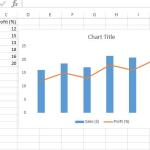
Step 5: Creating a Simple Chart
Charts help visualize data for quick understanding. To create a chart:
- Select the data range (A1:B6).
- Click on the Insert tab.
- Choose a Column Chart or Pie Chart.
Excel will instantly generate a chart showing your monthly budget distribution.
Step 6: Saving Your Workbook
To save your work:
- Click on File → Save As.
- Choose a location on your computer.
- Enter a filename such as MyBudget.xlsx and click Save.
Now, your spreadsheet is safely stored and can be reopened anytime.
Advanced Tips for Beginners
Using AutoFill
Excel’s AutoFill allows you to quickly copy formulas or continue a sequence. For example, type “January” in a cell, then drag the fill handle to automatically fill “February,” “March,” etc.
Freezing Panes
If you’re working with large datasets, use View → Freeze Panes to keep headers visible while scrolling.
Conditional Formatting
Highlight important data by setting rules such as “if value is greater than 200, color the cell red.” This can be accessed under the Home tab → Conditional Formatting.
Common Mistakes to Avoid
- Not Saving Frequently: Always save your progress to avoid data loss.
- Overloading a Single Sheet: Use multiple sheets within a workbook for better organization.
- Hardcoding Values Instead of Formulas: Use formulas where possible to make updates easier.
Practical Example: Simple Household Budget Tracker
Let’s create a slightly extended version of our budget sheet with a total calculation.
        |   A        |   B        |   C         |
        |------------|------------|-------------|
        | Item       | Amount ($) | Notes       |
        | Rent       | 800        | Paid        |
        | Groceries  | 250        | Pending     |
        | Utilities  | 120        | Paid        |
        | Transport  | 100        | Paid        |
        | Savings    | 200        | Pending     |
        |------------|------------|-------------|
        | Total      | =SUM(B2:B6)|             |
This sheet not only tracks expenses but also provides space for notes such as “Paid” or “Pending.” It’s a practical way to manage personal finance.
Conclusion
Congratulations! You’ve just learned how to create your first spreadsheet in Excel. From entering basic data and formatting it, to using formulas and generating charts, you now have the essential tools to get started. Excel may look overwhelming at first, but with practice, you will realize it’s one of the most valuable skills you can acquire for both professional and personal life.
Keep practicing, explore more functions, and soon you’ll be building powerful and automated spreadsheets that save time and improve efficiency.