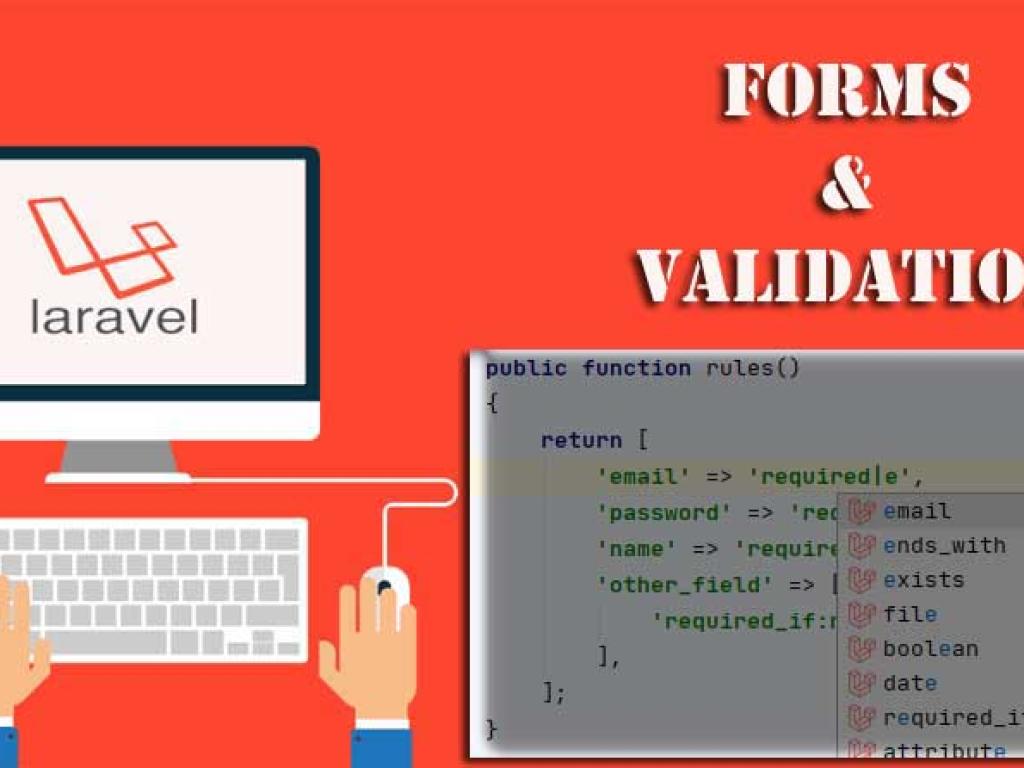
This in-depth tutorial will guide you through everything you need to know about creating forms and handling validation in Laravel. From building simple form fields to applying advanced validation rules, you’ll learn how to collect and secure user input with confidence.
One of the most common tasks in web development is collecting data from users. Whether it’s a registration form, login form, or contact form, you need a way to capture input safely. Laravel provides a powerful system for building forms and validating input effortlessly. In this guide, we’ll explore how to create forms, validate them, and secure user data using Laravel’s built-in features.
Why Forms and Validation Are Important
Forms are the gateway to collecting data in your application. Validation ensures the data collected is accurate, safe, and secure before it’s processed or stored in your database. Without proper validation, your application could face problems like:
Storing incorrect or incomplete data.
Security vulnerabilities such as SQL Injection or XSS attacks.
Poor user experience due to unclear or missing error messages.
Setting Up the Project
Before diving in, let’s set up a fresh Laravel project to work with forms.
// routes/web.php
use Illuminate\Support\Facades\Route;
use App\Http\Controllers\ContactController;

Route::get('/contact', [ContactController::class, 'index']);
Route::post('/contact', [ContactController::class, 'store']);
Step 2: Create a Controller
php artisan make:controller ContactController
// app/Http/Controllers/ContactController.php
namespace App\Http\Controllers;

use Illuminate\Http\Request;

class ContactController extends Controller
{
    public function index()
    {
        return view('contact');
    }

    public function store(Request $request)
    {
        dd($request->all()); // For debugging input
    }
}
Notice the @csrf directive in the form. Laravel automatically includes CSRF tokens to protect against cross-site request forgery attacks. This ensures that only authorized forms from your application can submit data.
Applying Basic Validation
Now let’s add validation to ensure users provide correct input.
For larger applications, it’s better to use Form Request classes for validation.
php artisan make:request ContactRequest
// app/Http/Requests/ContactRequest.php
namespace App\Http\Requests;

use Illuminate\Foundation\Http\FormRequest;

class ContactRequest extends FormRequest
{
    public function rules()
    {
        return [
            'name' => 'required|min:3',
            'email' => 'required|email',
            'message' => 'required|max:500',
        ];
    }
}
// app/Http/Controllers/ContactController.php
use App\Http\Requests\ContactRequest;

public function store(ContactRequest $request)
{
    return "Form validated with FormRequest!";
}
Customizing Validation Messages
public function messages()
{
    return [
        'name.required' => 'Your name is required!',
        'email.email' => 'Please provide a valid email address.',
    ];
}
Advanced Validation Rules
unique:users,email – ensures email is unique.
confirmed – ensures confirmation field matches.
regex:/^[A-Za-z0-9]+$/ – matches a pattern.
Validation Rule Reference Table
Here are some commonly used validation rules in Laravel:
Rule
Description
required
Field must not be empty
email
Must be a valid email address
max:value
Maximum length or value
min:value
Minimum length or value
unique:table
Value must be unique in a table
Handling Old Input
When validation fails, Laravel automatically redirects back with the old input. In your Blade form, you can use:
Keep validation rules in Form Requests for reusability.
Show clear error messages to users.
Use old() to repopulate forms on error.
Validate file uploads carefully to prevent abuse.
Conclusion
Laravel makes form handling and validation straightforward, secure, and flexible. With CSRF protection, built-in validation rules, error handling, and form requests, you can confidently build forms that not only collect data but also safeguard your application. By mastering these concepts, you’ll be well-prepared to create professional-grade web applications that deliver both functionality and security.
This article is a comprehensive tutorial on using the Prohibited Validation Rules in Laravel. You will learn how to apply prohibited, prohibited_if, and prohibited_unless with clear explanations, real-life scenarios, and code examples. This guide is perfect for developers who want to master advanced validation techniques in Laravel applications.
This detailed tutorial explores request validation in Laravel controllers. You’ll learn multiple techniques—basic controller validation, using form request classes, custom rules, conditional validation, error handling, localization, and best practices. With practical examples, code snippets, and structured explanations, this article is designed for beginners to advance learner.
This guide teaches you how to deploy Laravel applications to production servers. From preparing your environment and configuring Nginx or Apache, to database migrations, caching, performance optimization, CI/CD pipelines, and security practices—this article covers everything step by step.It’s suitable for both beginners and advanced developers who want to ship stable, secure & scalable app.
This website uses cookies to enhance your browsing experience. By continuing to use this site, you consent to the use of cookies. Please review our Privacy Policy for more information on how we handle your data. Cookie Policy
These cookies are essential for the website to function properly.
These cookies help us understand how visitors interact with the website.
These cookies are used to deliver personalized advertisements.